
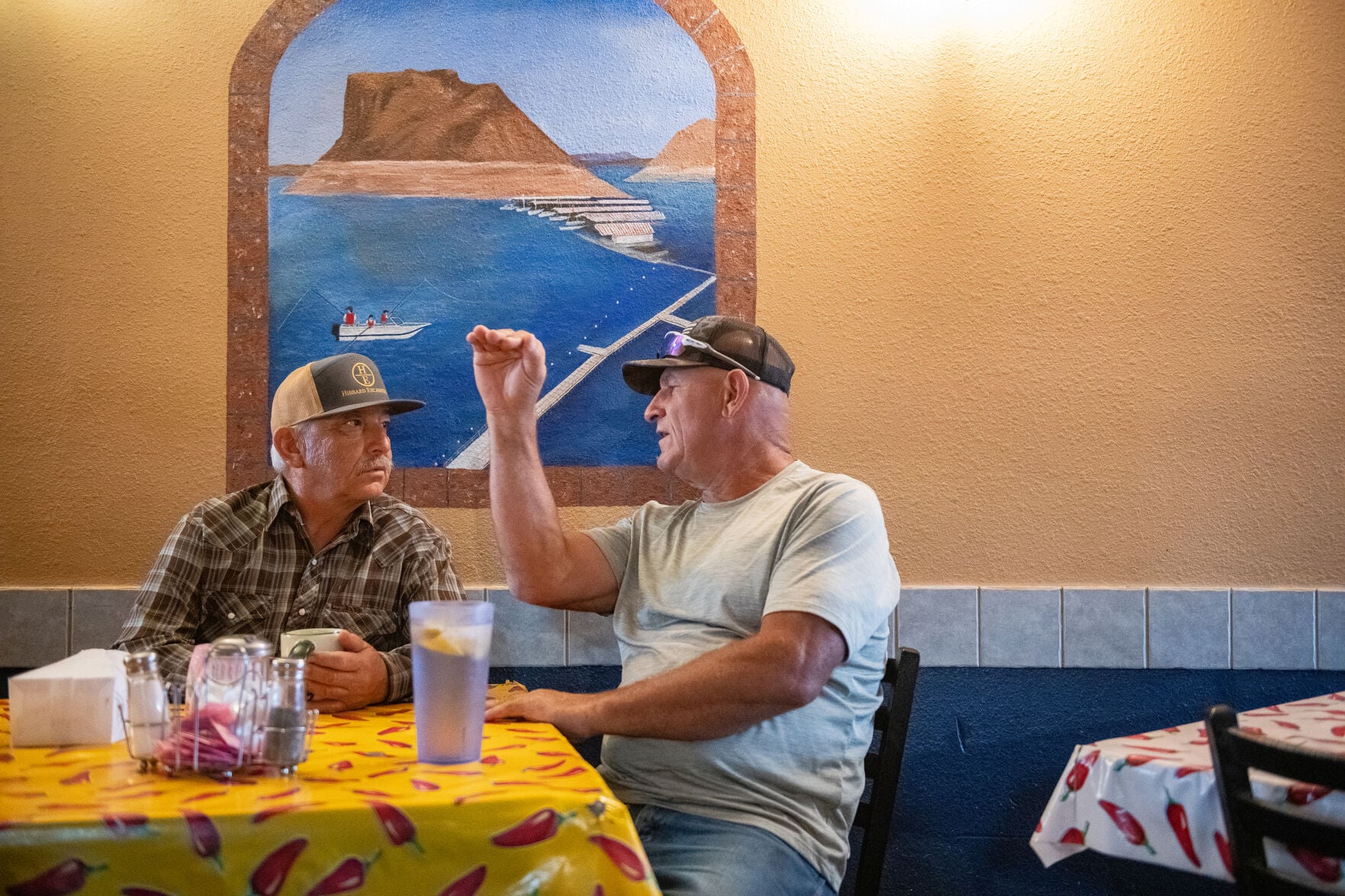
HATCH — Every morning starting at 6 a.m., veteran farmers frequent The Pepper Pot, a family-owned, Anthony Bourdain-approved institution famous for its Hatch chile empanadas.
They start the coffee pot and schmooze about a range of topics, from Little League to the Bracero Program.
Conversations last week took on a more serious tone: The chile supply is at a historic low due to drought-stricken land, diseased plants and a catastrophic flood last month that led to crop losses in the millions of dollars.
“We prayed for the rain, and we got it,” said Shane Hopper, 78, a local blacksmith who joins the mostly septuagenarian farmers at breakfast. “We’re all learning something now.”
These farmers come from families that have tilled the Southern New Mexico land for up to 100 years, but now they fear they may be the last in their bloodline to do so.
 Josh Bachman/For The New Mexican
A levee breach Sept. 29 close to the outlet of the Rio Grande in nearby Rincon devastated Don Hackey's pecan crop — as heavy downpours from Hurricane Polo drenched communities statewide that were already saturated from days of monsoon rains.
Hackey, who is approaching his 50th year farming, called it a “hell of a way to celebrate."
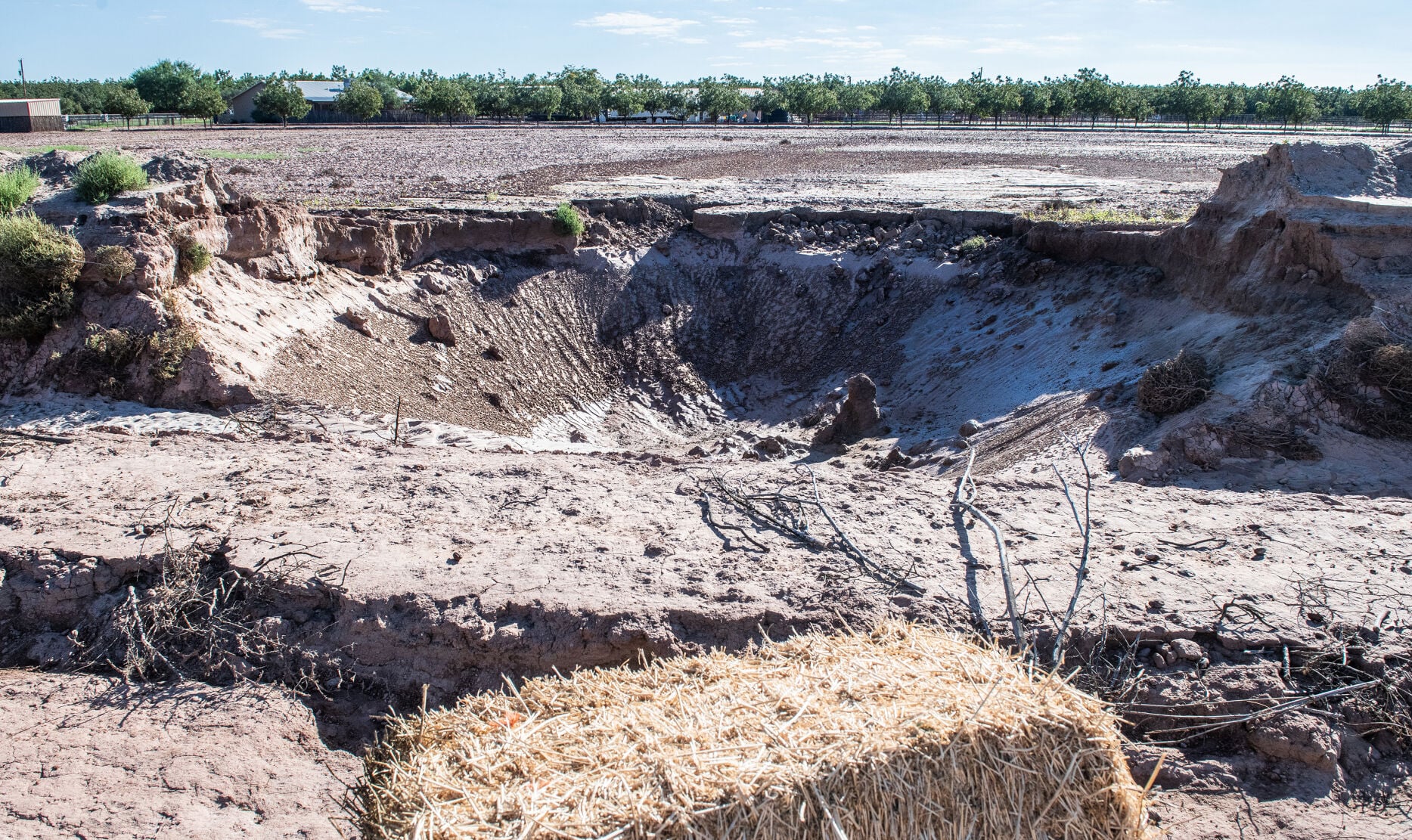
Following the breach near the Rinccon Water Treatment Plant. Hackey estimated it took just 40 minutes for the 134-square-mile Rincon Arroyo watershed to overflow, inundating pecan orchards and crop fields with muddy, silt-filled water and destroying costly equipment.
“You’re on first. They knock a grounder to shortstop, and you’ve got to make it to second. How’s that going to happen? ... That’s where we’re at, and we’re trying our best just to survive this thing,” said Joe Lack, the owner of Lack Farms, who was short 150 acres of chile this season.
Lack is now reckoning with increased costs due to the flooding: “It tears your equipment up. You don’t get your crop harvested. Now you got equipment payments. You got water payments. You got taxes. You got … land payments. All those things are still there. They don’t go away just because you lose your crop.”
‘It takes years to recover’
This is not the first — nor the most severe — flood the Hatch area has endured, but aging farmers are already worn down and fear recovery could take decades.
 Josh Bachman/For The New Mexican
A 6-foot wall of water flooded Hatch 20 years ago after the Placitas Arroyo breached its banks on a day of heavy rain, according to the Las Cruces Sun-News. Up to 4 feet of water stood in hundreds of homes and businesses.
A bulletin board at the entryway to The Pepper Pot features photos, newspaper clippings and a framed award from the Hatch Valley Chamber of Commerce, recognizing the restaurant for its recovery efforts after the August 2006 flood — a departure from the restaurant's chile-forward decor.
“Believe it or not, we rebuilt in two weeks here,” said Rodrigo Varela, who owns the building housing the farm-to-table restaurant. By Labor Day in 2006, more than 30,000 visitors flocked to the village of about 1,000 to attend its annual Hatch Chile Festival.
The rebound won’t be so speedy this time around.
“It takes years to recover. You don’t get recovery overnight. … I’ll speak for myself: I ain’t got no 20 years left in my life. I’m ready to give up,” Hatch Mayor Dennis Torres said at The Pepper Pot on Thursday morning. “You get people that are 70, 80, 90 years old, and you lose your homes; you lose your farms; you lose your equipment. How do you replace that?”
Residents also face environmental and health risks: Floodwater seeped into wells and clogged their infrastructure with sediment from the arroyo. Meanwhile, barrels of oil tipped over, along with hydraulic fluid and other solvents, contaminating the water.
What emerged from the arroyo is a “breeding ground for all bacteria,” Lack said, including E. coli and salmonella.
“You get mold, and once you get mold, you get health issues,” Torres said. “When we had the flood here in ‘06, people had to go get tetanus shots for stuff like that because [they] had water all the way up to their waists.”
Many farmers criticized what they consider to be largely reactive measures from the state. Maintenance of dams, arroyos and the Rio Grande should not come only in the face of tragedy, they said.
“We don't get ahead of problems. We deal with problems after it's already a destructive force, right?” Hackey said, adding officials will say: “You know what? That dam's been good for the last 50 years up there, and our budget says we don't have any money.”
“You’ve got to have big pockets to survive anymore. It’s sad,” said Robert Carson, a Rincon farmer born into a New Mexico chile dynasty.
 Josh Bachman/For The New Mexican
For someone young starting out in farming, “it’s really risky,” Carson added, estimating his chile supply dropped 40% this year.
Pecan impact: ‘Drives me nuts’
Normally, the Rincon Arroyo’s release is 2,800 cubic feet per second. Last week, that rate rose to almost 7,000 cfs, Hackey said during a Thursday tour of his pecan orchards, which run along the arroyo.
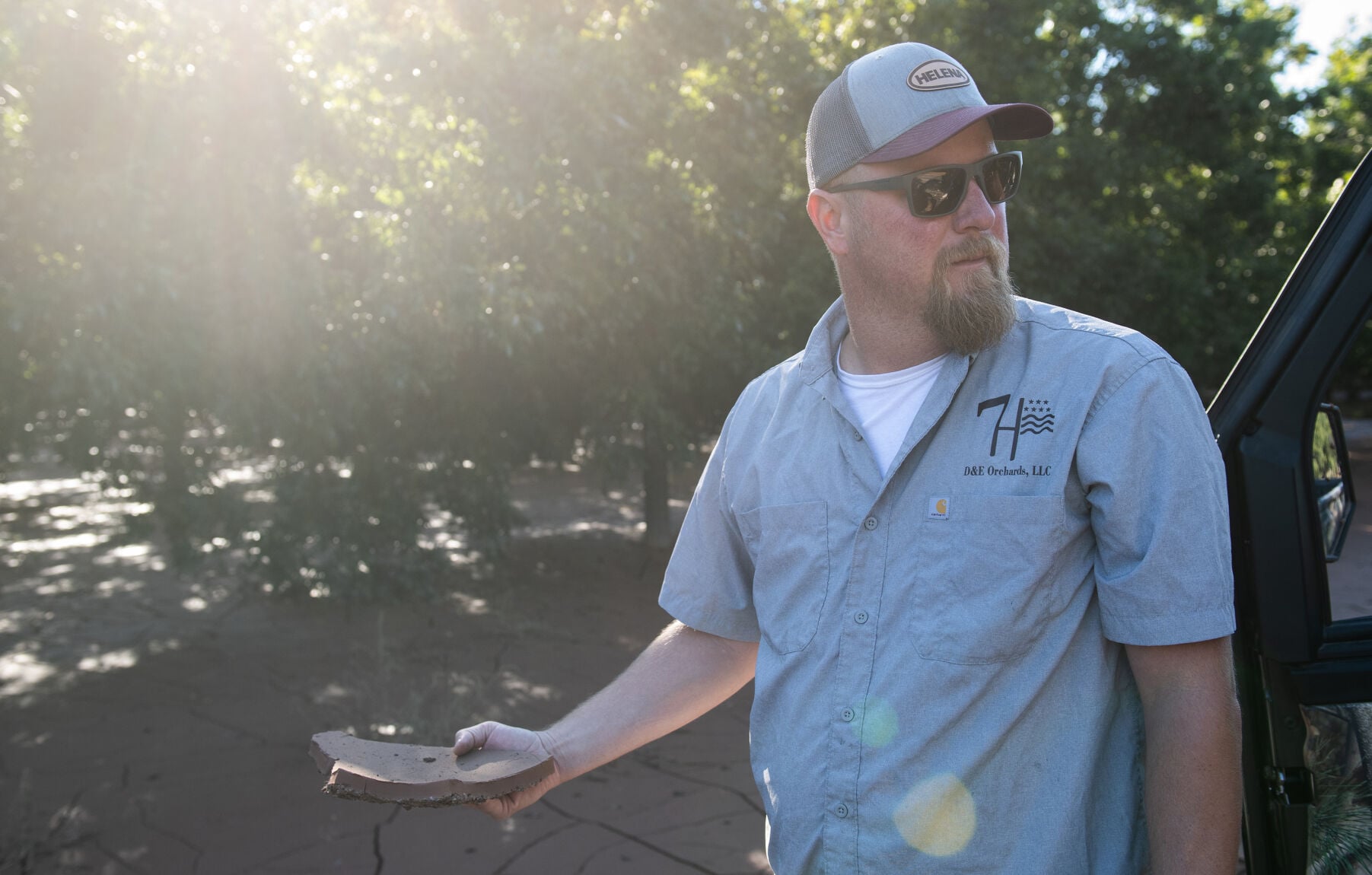
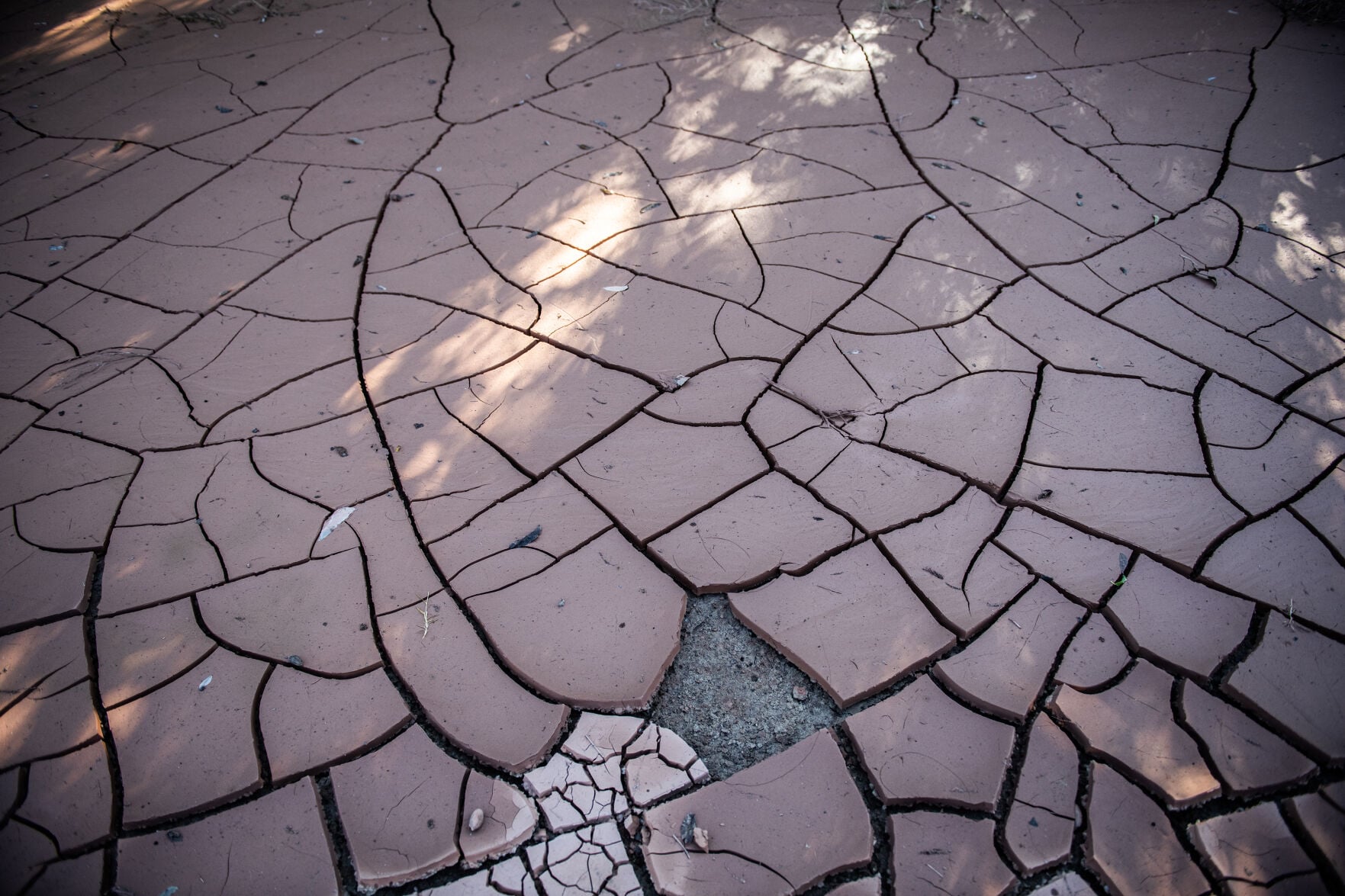
The water and clay that emerged from the arroyo began to infiltrate fields — in some places by 1 to 5 feet — washing away pecans. Hackey estimated the arroyo’s bottom was 6 feet lower before the banks eroded in late September.
A portion of his equipment is forever lost to the storm. Even eight days after the flooding, large puddles remained in the corridors between the trees. Black water marks stained the white building housing the machinery, and the building’s floors were coated with clay.
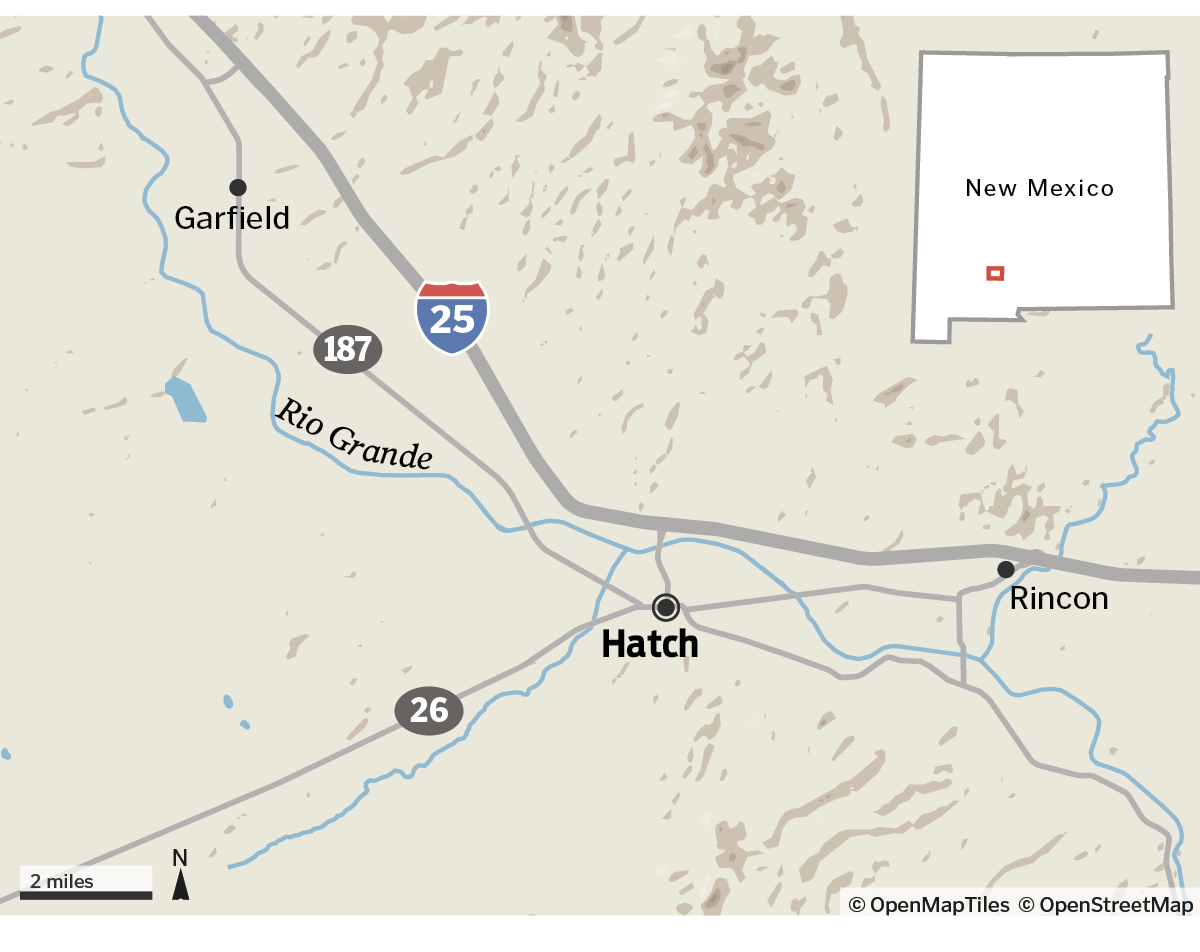
Varela, who works at Hackey’s orchard, is down two trucks from the flooding. Like many farmers in the region, he has deep roots in the area: His father ended up in Garfield through the Bracero Program, which issued temporary work permits to millions of Mexicans starting in 1942 to combat World War II labor shortages.
 Josh Bachman/For The New Mexican
The damage extends beyond lost equipment. Once dry, the hardened, thick sediment on the ground blocks oxygen from reaching pecan tree roots, and the red clay soil becomes toxic, making growth and harvesting impossible. When it comes to processing the nuts, another issue arises: The farm’s machinery cannot separate the thick clay from a pecan, Hackey said.
The economic impact is devastating: “That’s what makes me wake up at 3 in the morning,” he added. “ The frustrating thing is we can't do anything in the fields. I mean, that drives me nuts.”
Despite recent challenges, Hackey does not want to let go of the family-owned business. His relatives came in the 1920s from Louisiana, sent out West due to a case of tuberculosis. Soon, he’ll pass on the operation’s management to his son Roy, a Hatch High School and New Mexico State University graduate nearing 40.
Roy Hackey is worried about the recovery of the orchards.
 Josh Bachman/For The New Mexican
“The government can’t help,” he said. “It could be years before everything is cleared out.”
Nights too hot for chile crop
As the self-proclaimed “Chile Capital of the World,” Hatch is under a lot of pressure to maintain its reputation. Still, this year’s green chile shortfalls range from 20% to 50%, according to the New Mexico Chile Association. Evenings were too hot, even for Southern New Mexico standards, disrupting the crop’s growth.
“This guy’s taking a hell of a beating just on his chile,” Carson said, referring to the 150 acres his brother-in-law, Lack, lost this year.
Richard Moyers, another local chile farmer, “got a lot of devastation,” Varela added.
 Josh Bachman/For The New Mexican
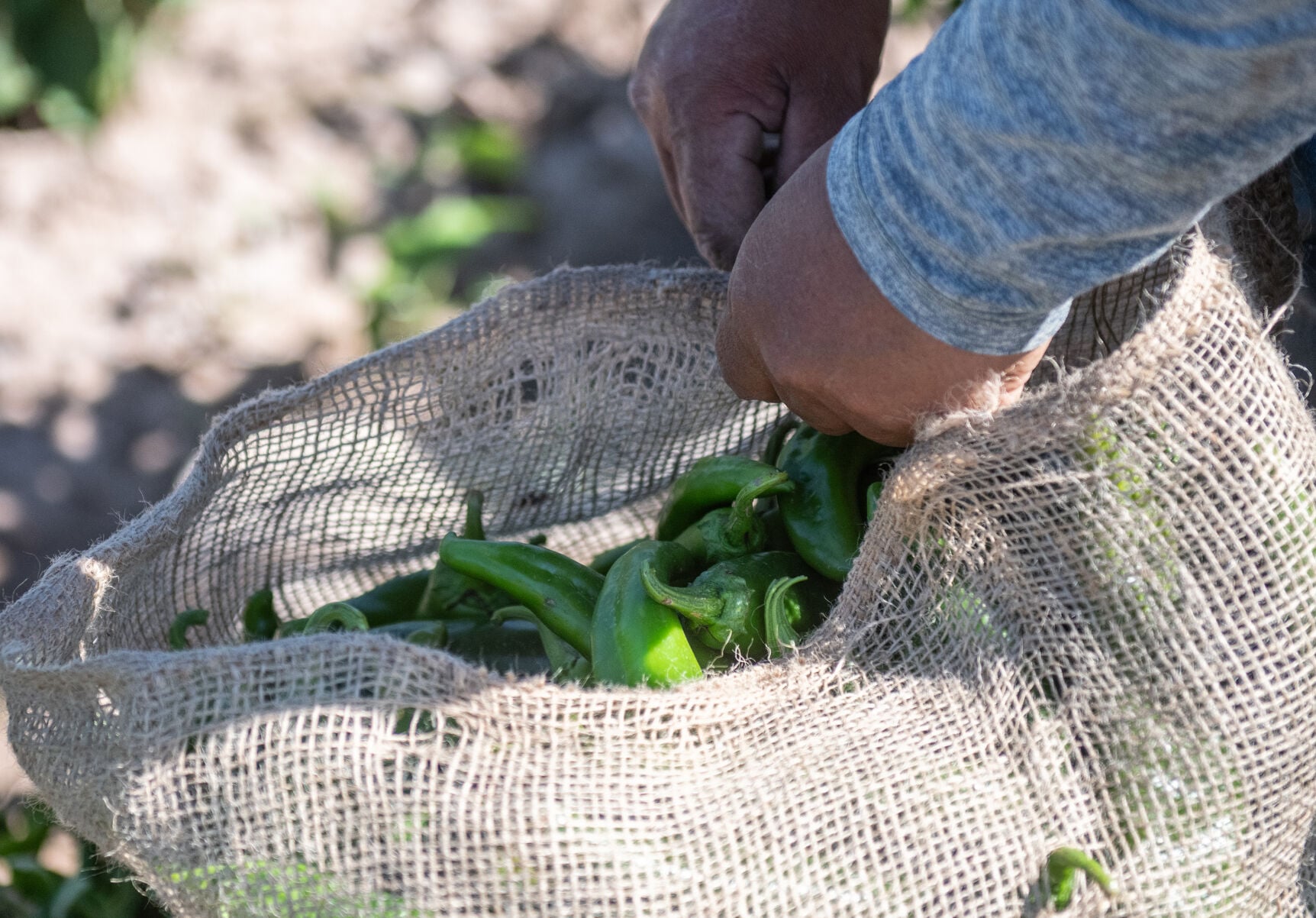
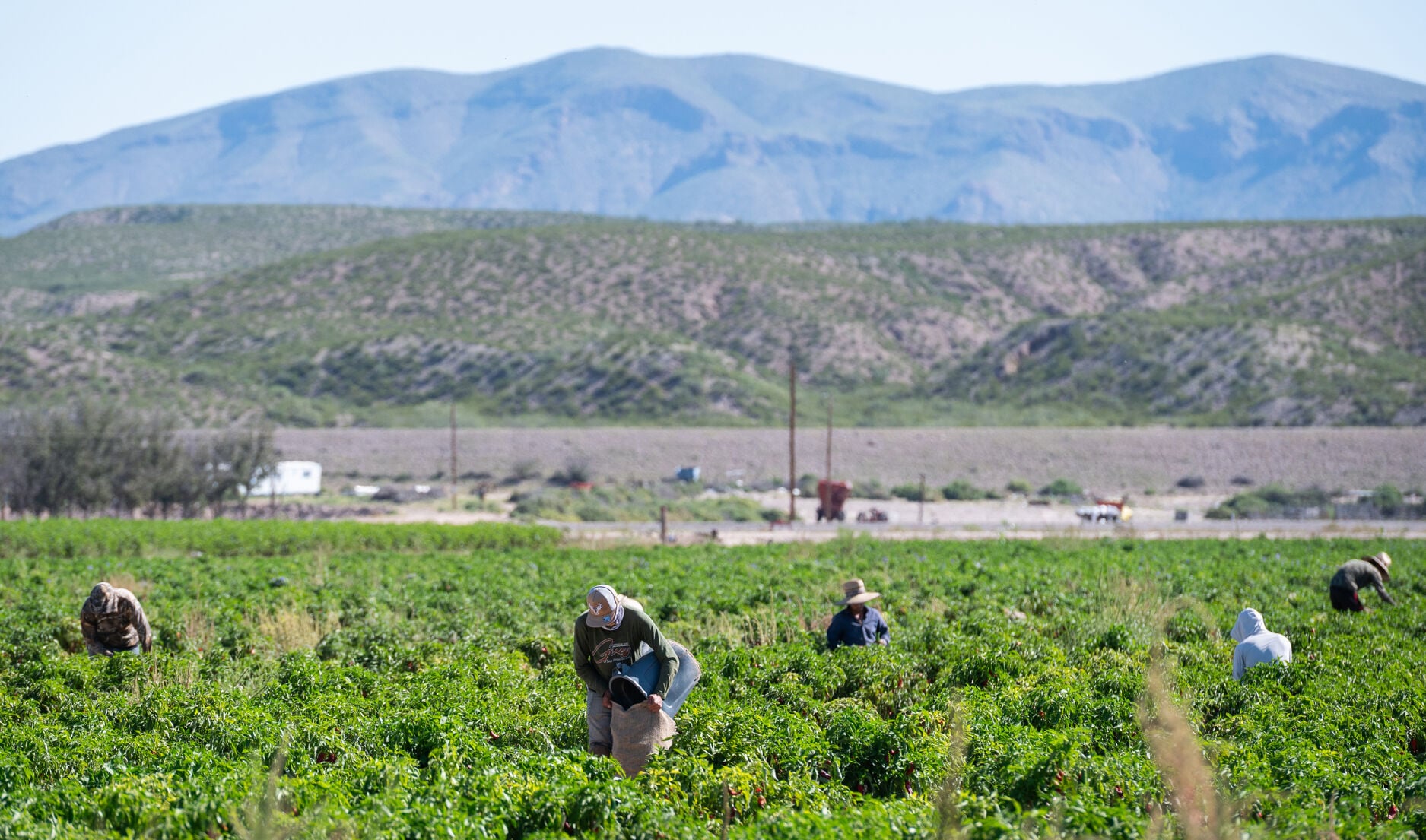
But Moyers faces a separate challenge: Because there aren’t enough farmers in the fields to pick the chile, it remains on the plants.
Meanwhile, at The Pepper Pot, chile shipments come in every morning.
“People say, ‘Oh I want this recipe.’ Unless you get the fresh chile, it’s not going to taste like what I’m giving you,” Varela said.
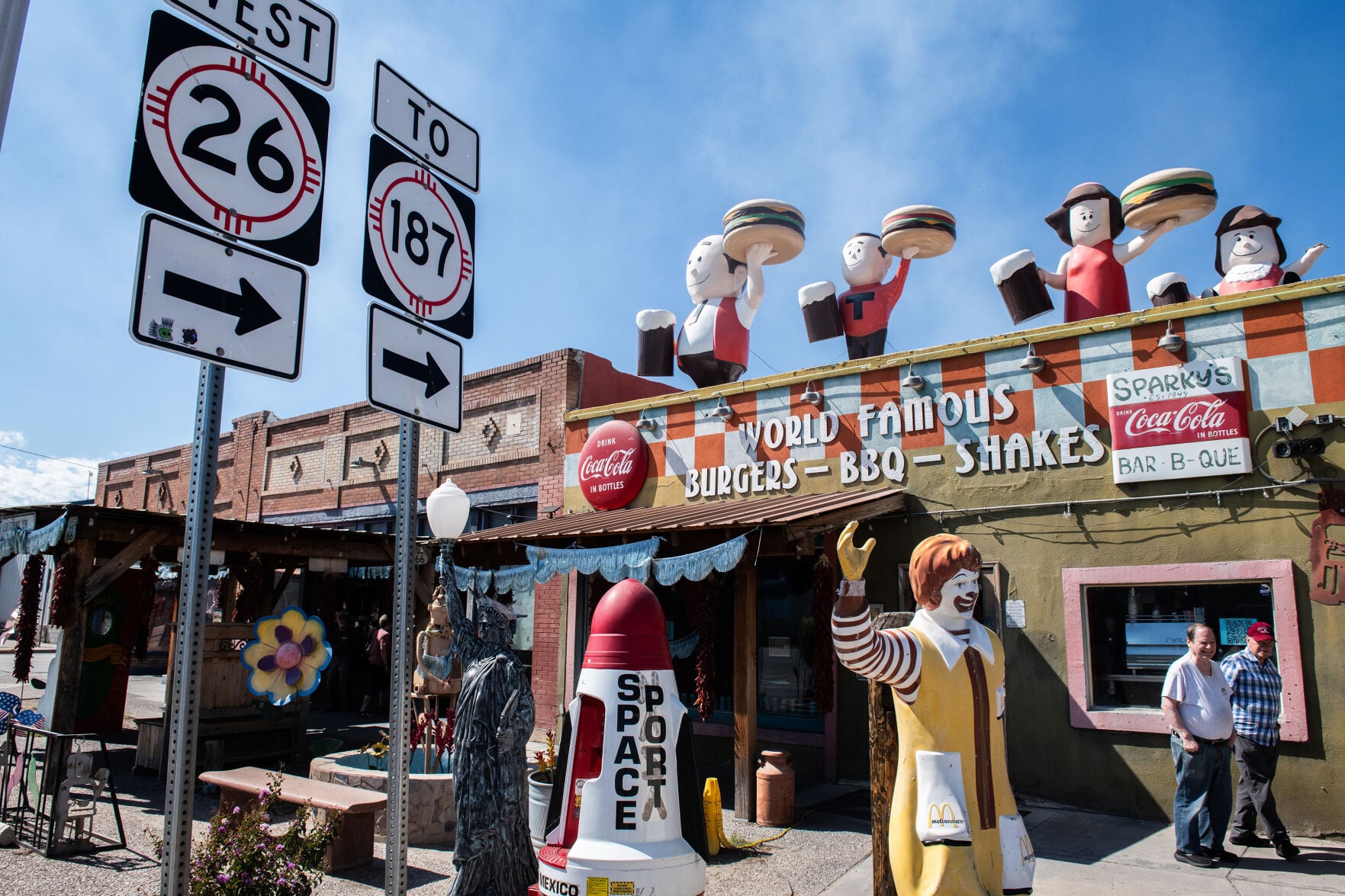
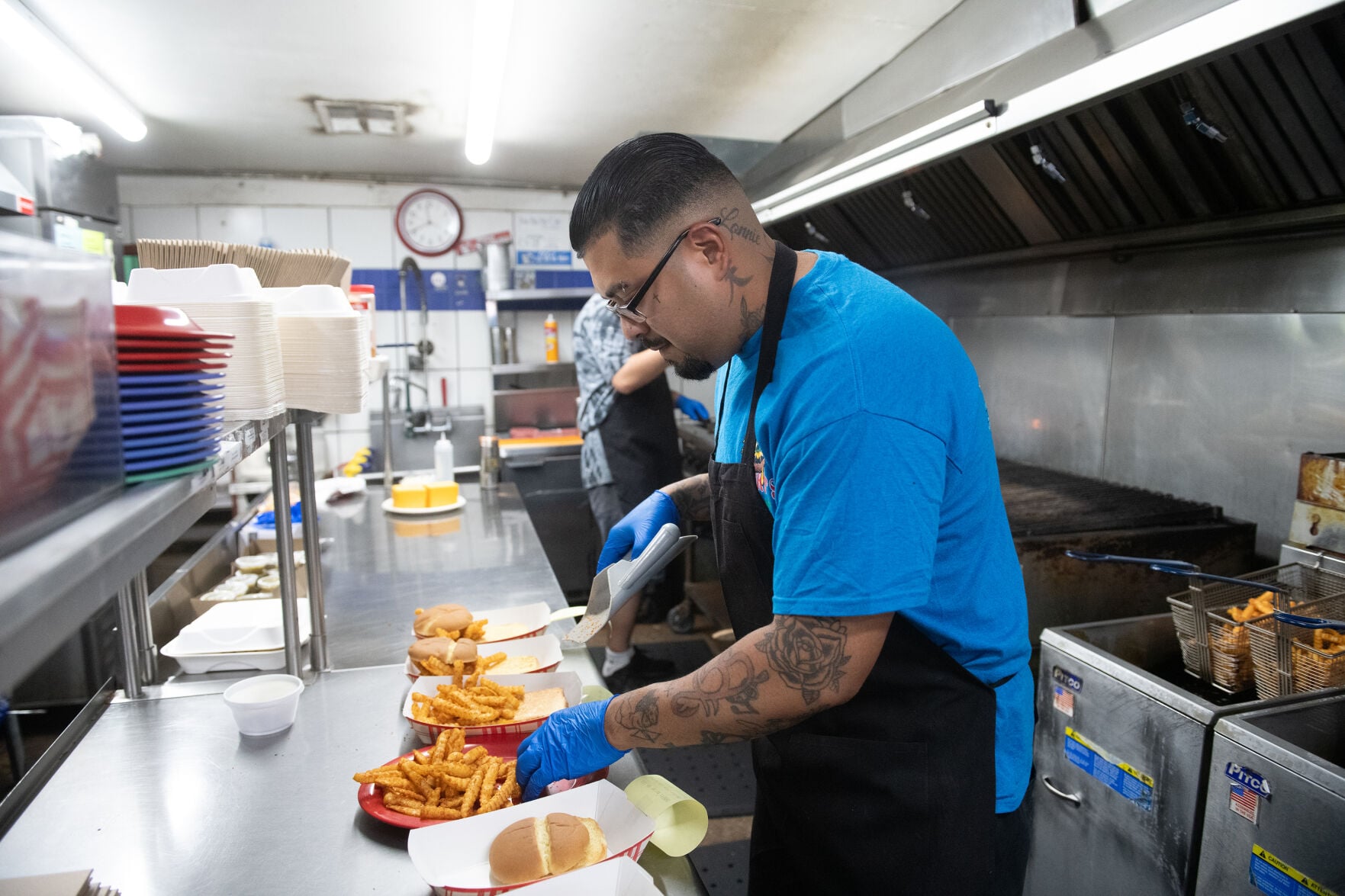
Sparky’s, another Hatch institution known for larger-than-life decorations and its green chile cheeseburger, goes through 500 to 700 pounds of local green chile during the four days of the week it’s open, co-owner Josie Nunn said.
Nunn added Sparky’s has been “really lucky” not to be impacted by the shortages.
Last week’s rain actually aided some chile fields. This was the case for Fabian Grajeda, who spoke from his family’s farm stand off N.M. 26.
Grajeda, 27, started picking chiles when he was 12. He recalled his father, an immigrant from Chihuahua, telling him: “Go pick 10 sacks. I’ll come back later” — only to return at 5 p.m.
As the smell of roasting chiles wafted from the patio of the farm stand, Grajeda said this year’s production loss falls between 25% and 50%.
While nearby farms reported chile losses of up to 300 acres due to the flooding, Grajeda Farms is seeing marked improvement in the second round of its chile harvest — but it's far from last year’s highs, according to Grajeda.
The green chile season is coming to an end earlier than usual, he added, and deliveries have slowed: Aside from hot nights, curly top virus afflicted the fields, rendering diseased chiles inedible.
The harvest ends at the first frost, which could be as soon as next week, Grajeda said.
 Josh Bachman/For The New Mexican
Meanwhile, the red chile harvest has begun about a month before its usual Nov. 1 start, he said, pointing to the red chiles he was roasting on the hillside.
For the weary farmers, who have dealt with both a dearth of water and a sudden abundance in recent months, a break is coming.
Grajeda’s employees — the majority who come from Mexico through the H-2A Temporary Agricultural Worker Program — will soon return home for two weeks as the peppers dry on the plants.
Then, the workers will return to harvest red chile, before spending the winter processing the chile to send to restaurants and stores in the off-season.
The Hatch-area farmers, though tired, remain resilient: “The one thing about everyone in here is that they all keep a grin on their face,” Hopper said Thursday morning at The Pepper Pot. “See how everybody keeps smiling? Everyone’s laughing.”
They spoke highly of peers who worked in the fields well into old age: “It’s 102 degrees, and he’s chopping weeds, and he’s 92 years old,” Varela said of a friend.
“Under hardship, he didn’t start crying and whining and throwing a fit,” Lack added. “He just rolled his sleeves up.”
 Josh Bachman/For The New Mexican
Julia Gentin is a reporter for The Las Cruces New Mexican, The Santa Fe New Mexican and Searchlight New Mexico through a partnership with Report for America, a national service program that places journalists into local newsrooms. She covers the Southern New Mexico region. Learn more about Report for America at reportforamerica.org .


