
Key Points
-
Intel agreed in October 2020 to sell its NAND memory and storage business to SK Hynix for $9 billion, with the final closing completed in March 2025.
-
SK Hynix's second-quarter revenue rose 257% year over year as AI demand pushed memory prices higher.
-
Micron's market value stands near $1.05 trillion, against about $464 billion for Intel.
In October 2020, Intel( INTC-2.85%) agreed to sell its NAND memory and storage business to SK Hynix( SKHY-0.35%) for $9 billion. The package included Intel's solid-state drive business, its NAND components and wafers, and its factory in Dalian, China.
One thing I want to be clear about from the start: the buyer was SK Hynix, not Micron( MU-0.27%). Micron's role here is as a measuring stick -- the biggest American memory company, and the closest thing to a pure-play gauge of what the memory business became after Intel left it.
That measuring stick says a lot. Micron's market value stands near $1.05 trillion as of this writing. Intel's is about $464 billion. So was the exit a mistake?

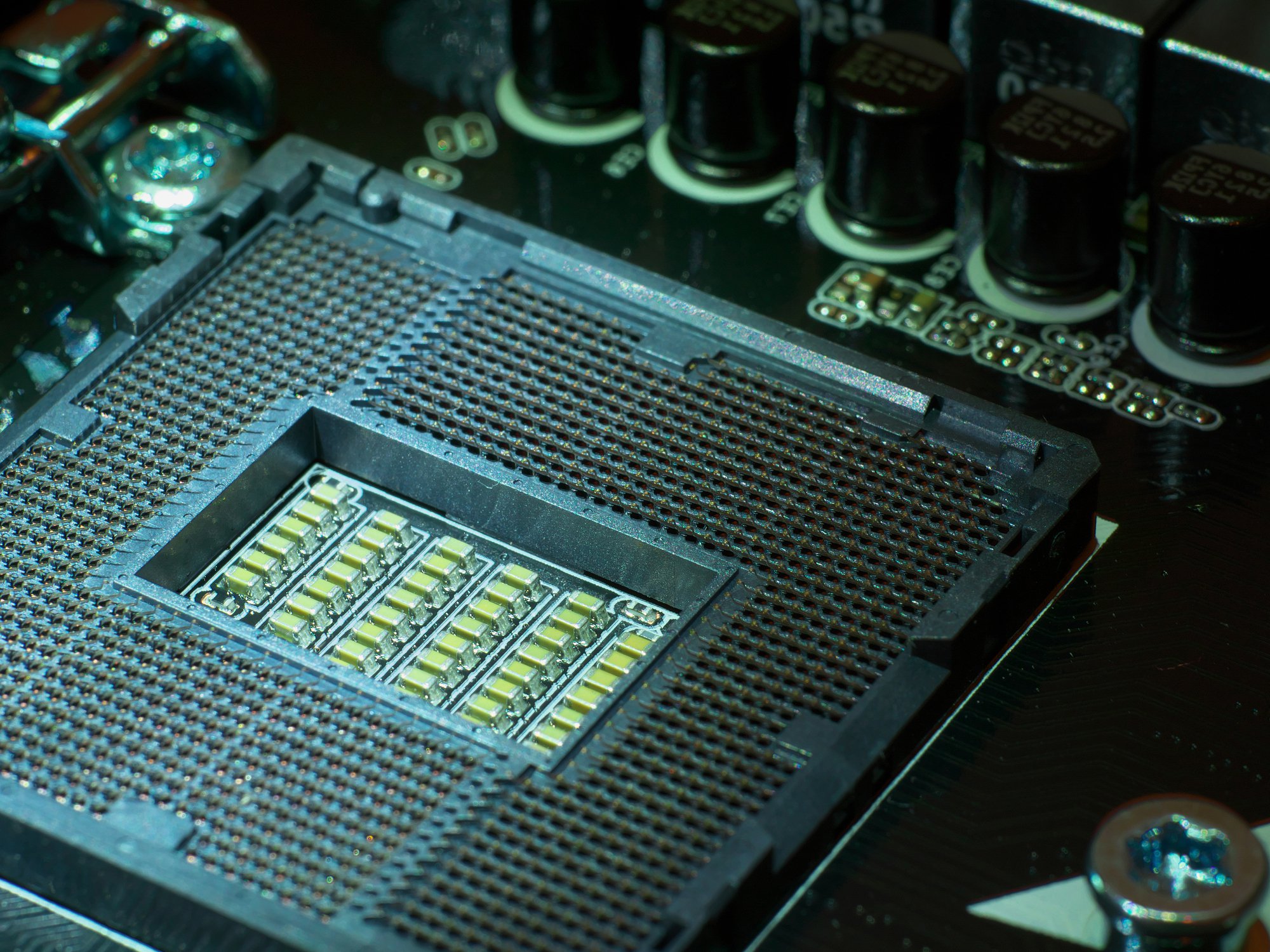
Image source: Intel.
The 2020 exit
The sale unfolded in two steps. SK Hynix paid $7.0 billion at the first closing, at the end of 2021, taking the drive business and the Dalian factory and standing up a new subsidiary, Solidigm, to run the drives.

This Card Just Received a Rare 5-Star Rating
Our team of credit card pros don’t just recommend this card—they actually use it. Motley Fool Money calls it a top pick for a reason.
The remainder of the deal (the NAND technology, intellectual property, and the people behind them) transferred on March 27, 2025, with Intel collecting about $1.9 billion, net of adjustments.
Intel said at the time of the announcement that it intended to put the proceeds toward "long-term growth priorities, including artificial intelligence, 5G networking and the intelligent, autonomous edge."
Where to invest $1,000 right now
**When our analyst team has a stock tip, it can pay to listen. After all, Stock Advisor’s total average return is 986% *** — a market-crushing outperformance compared to 214% for the S&P 500.
They just revealed what they believe are the 10 best stocks for investors to buy right now, available when you join Stock Advisor.
_ *Stock Advisor returns as of August 29, 2026._
What Intel mostly built instead, of course, was manufacturing. The centerpiece of the company's strategy today is Intel Foundry, the contract chipmaking arm. Its segment revenue grew 31% year over year to $5.8 billion in the second quarter, a figure that includes the work it does for Intel's own product groups. And it still posted a $2.1 billion operating loss.
Overall, Intel's total revenue rose 25% to $16.1 billion in that quarter, its fastest growth in years. But profitability at the foundry hasn't arrived.
Memory became the bottleneck
For a while, the exit looked well-timed. After all, memory prices collapsed in 2022 and 2023, and Micron posted a $5.83 billion net loss in its fiscal 2023 as its annual revenue nearly halved. NAND, the specific business Intel sold, took a beating.
Intel, meanwhile, had collected $7.0 billion before the worst of it and never had to fund the losses.
Then artificial intelligence (AI) rewired the industry's economics. Data centers built for AI need enormous amounts of memory, and prices have surged as demand outruns supply.
Showing just how much the industry has changed, SK Hynix's second-quarter revenue of 79.3 trillion won was up 257% year over year, and its operating margin reached 76%. Both were records. Add the 52.6 trillion won it booked in the first quarter, and first-half revenue crossed 100 trillion won for the first time in the company's history. It said high-performance products for AI servers led price increases across both DRAM and NAND.
As for Micron, its trillion-dollar valuation mostly rides on DRAM and the high-bandwidth memory feeding AI data centers -- businesses Intel wasn't selling in 2020. The headline comparison, then, isn't asset for asset. It measures what happened to the industry Intel left, and to the one it stayed in, over the same stretch.
Grading the exit
The 2020 logic was defensible. NAND was a commodity business that demanded constant capital, Intel was fighting to fix its core manufacturing, and something had to go.
The thinking was that a focused company would beat a sprawling one. And the 2022 downturn briefly made the sellers look like the smart ones.
After a decade covering tech stocks, though, what stands out to me is the direction of the trade. Intel exited the corner of the industry where AI has since created scarcity, and it used the room to double down on a business that still loses money every quarter.
Collapse

NASDAQ: INTC
Intel
INTC Motley Fool Moneyball Superscore: 60 out of 100. Get access to Motley Fool Moneyball. Premium Feature
Moneyball Superscore
60/100
(-2.85%) $-2.62
Current Price
$89.47
INTC
YTD1w1m3m6m1y5y
PriceVS S&P
Key Data Points
Market Cap
$470BMarket cap calculated using publicly traded shares outstanding only. Does not include unlisted, private, or dual-class non-traded shares. Implied market cap may vary.
Day's Range
$89.05 - $93.70
52wk Range
$23.68 - $142.35
Volume
86.2M
Avg Vol
118.2M
Gross Margin
39.05%
And SK Hynix, the actual buyer, is now flush enough that its board approved buying back about $29 billion of its own stock over three months.
To be fair, Intel likely couldn't have funded both paths. The foundry build-out has consumed far more than $9 billion, and carrying NAND through the 2023 downturn would have cost it more before today's prices arrived.
Ultimately, the scoreboard is what it is. The $9 billion was arguably a fair price for what Intel sold in 2020. Micron's value has since climbed to more than twice Intel's, and the business Intel kept building hasn't yet shown it can earn what memory now earns.
On today's numbers, the exit is the more expensive decision. Of course, memory is a cyclical business, so the gap may narrow again with the next downturn. What would change the grade for good is the foundry earning real money, and it hasn't yet.
Should you buy stock in Intel right now?
Before you buy stock inIntel, consider this:
The Motley Fool Stock Advisor analyst team just identified what they believe are the**10 best stocks**for investors to buy now… and Intelwasn’t one of them. The 10 stocks that made the cut could produce monster returns in the coming years.
**Consider when Netflix made this list on December 17, 2004... if you invested $1,000 at the time of our recommendation, you’d have $430,571! ** **Or when Nvidia made this list on April 15, 2005... if you invested $1,000 at the time of our recommendation, you’d have $1,399,268! **
Now, it’s worth noting_Stock Advisor_’s total average return is986% — a market-crushing outperformance compared to214%for the S&P 500. Don't miss the latest top 10 list, available with Stock Advisor, and join an investing community built by individual investors for individual investors.
_ *Stock Advisor returns as of August 29, 2026._
Read Next

Aug 28, 2026•By Lyle Daly
How Much Data Center Revenue Do AI Companies Earn?

Aug 28, 2026•By Keithen Drury
Meet the 3 Stocks Nvidia Has Invested Billions Into

Aug 26, 2026•By Daniel Sparks
The Market Has Priced Intel Anywhere Between $24 and $142 in the Past 12 Months
Aug 25, 2026•By Matt DiLallo
How to Buy Taiwan Semiconductor Stock (TSM)

Aug 21, 2026•By Daniel Sparks
Intel Sold $20 Billion of Stock at $95 a Share. It Now Trades Below $93.

Aug 19, 2026•By Daniel Sparks
About the Author

Daniel Sparks is a contributing Motley Fool stock market analyst covering technology, industrials, financials, and consumer goods. Daniel is the owner and chief investment officer of Sparks Capital Management. He holds a master’s degree in business administration from Colorado State University. The Globe and Mail profiled him and his investing philosophy in an article titled, “This stock picker is outperforming nearly everybody else. Here’s how he is doing it.”
Motley Fool issues A.I. buy alert
This tech could reach $80 trillion. Imagine a technology worth over 16 Nvidias.
What in the world could be worth 16 Nvidias? The answer is a radical tech breakthrough that our experts think is transforming every walk of life. And this giant leap forward has many on Wall Street very excited.
Stocks Mentioned
[
Intel
NASDAQ: INTC
$89.47
(-2.85%)-$2.62](https://www.fool.com/quote/nasdaq/intc/)

Motley Fool Stock Advisor’s Latest Pick
% Avg Return
Motley Fool Stock Advisor's Latest Pick
987% Avg Return b*
[
SK Hynix
NASDAQ: SKHY
$161.04
(-0.35%)-$0.57](https://www.fool.com/quote/nasdaq/skhy/) [
Micron Technology
NASDAQ: MU
$932.86
(-0.27%)-$2.53](https://www.fool.com/quote/nasdaq/mu/)
*Average returns of all recommendations since inception. Cost basis and return based on previous market day close.
Ad
This Card Just Received a Rare 5-Star Rating
Our team of credit card pros don’t just recommend this card—they actually use it. Motley Fool Money calls it a top pick for a reason.
Premium Investing Services
Invest better with The Motley Fool. Get stock recommendations, portfolio guidance, and more from The Motley Fool's premium services.


