
La Ràpita drives a blue economy plan to transform the Ebro delta
The installation of solar panels on the mussel rafts of the Alfacs Bay, among the project's initiatives
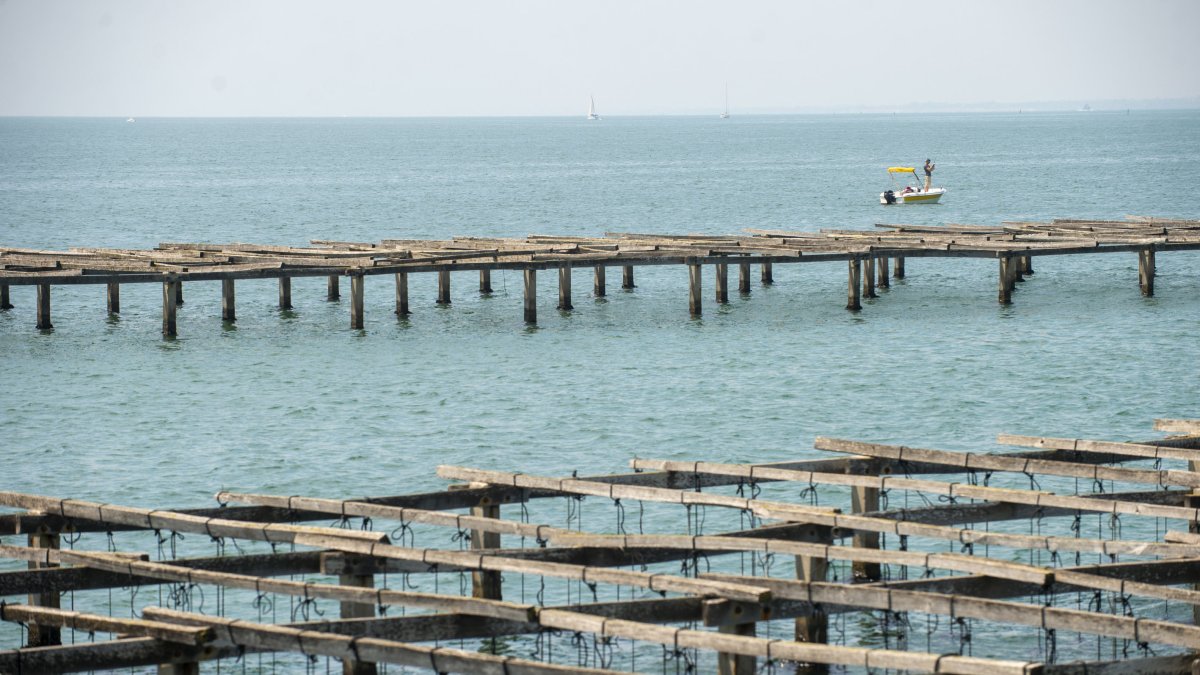
Muscleres dels Alfacs.Joan Revillas/DT
Install solar panels on the mussel rafts of the Alfacs Bay to generate the equivalent of 238% of La Ràpita's electricity consumption, and help reduce water temperature by 5 degrees, thus ensuring the viability of oyster and mussel production. This is one of the initiatives included in the Strategic Project for a Sustainable Blue Economy of the Ebro Delta (PEDE). A long-term proposal led by the La Ràpita City Council (with support from the Montsià County Council and the Catalan Public Employment Service) that aims to promote a new sustainable development model for the territory based on the recognition of the Alfacs Bay as an OMEC (Other Effective Area-based Conservation Measures), a figure endorsed by the United Nations that allows biodiversity conservation to be compatible with economic and social activity.
The plan establishes a comprehensive strategy that looks to the future of the Delta, betting on sustainability, the blue economy, innovation, retention of young talent, and the creation of new opportunities linked to natural resources and the identity of the territory.
The mayor of La Ràpita, Xavi Reverté, describes the proposal as "historic and transformative for the municipality and the whole of the Terres de l'Ebre".
The goal is to be the first OMEC in the Mediterranean by 2027. This figure does not imply new restrictions, but rather recognizes management models that already combine environmental preservation with human activity, according to the promoters. "It is a tool that protects biodiversity but also supports sustainable economic development and allows activities such as fishing, research, or traditional production to continue," explained the international relations officer of the candidacy, Jesús Maestro, during the presentation of the initiative in La Ràpita.
Under this recognition, an ambitious and multimillion-dollar roadmap is projected to take advantage of the blue economy, and the values and essence of the Ebro delta as a tool for revitalization and growth of the entire territory.
In addition to marine renewable energies, it includes the promotion of quality ecotourism and scientific tourism, bioeconomy, and technological innovation with territorial synergy, according to the project.
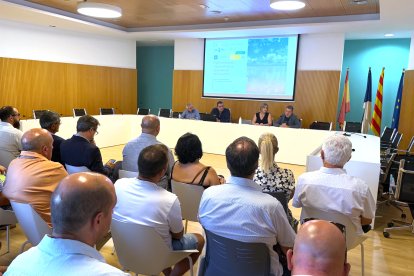
Presentation of the plan in La Ràpita.ACN
All of this based on RapiTechMar, a future hub that generates and attracts talent in blue economy and decarbonization applied to the marine environment, located in the same port of La Ràpita.
In addition to the Blue Economy Centre, a Coastal Observatory, a Talent Residence, business incubators and coworking space are planned, as well as new hotel establishments and a hospitality school in the municipality, along with the construction of the pier of the Trinitat salt flats. These initiatives are seen by the promoters as compatible with the current protection figures of the Ebro Delta Natural Park.
The project director, Bartomeu Rosselló, describes the investment planned in the PEDE, between 750 and 1,040 million euros to be executed by 2035, as "feasible and transformative".
In short, the project aims to be a catalyst for territorial growth and talent retention in the Terres de l'Ebre, according to Reverté.

