
Record Diesel Prices Raise Fears of Local Fuel Shortages
By Kurt Cobb - Sep 21, 2026, 11:00 AM CDT
- U.S. gasoline and diesel remain broadly available, but record prices and isolated diesel outages are raising concern about future supply.
- Location increasingly matters, with California paying substantially more for fuel than refinery-rich Texas and airlines cutting capacity as jet fuel costs rise.
- The energy crisis could shift from primarily a pricing problem to a physical-delivery problem if inventories and supply chains tighten further.
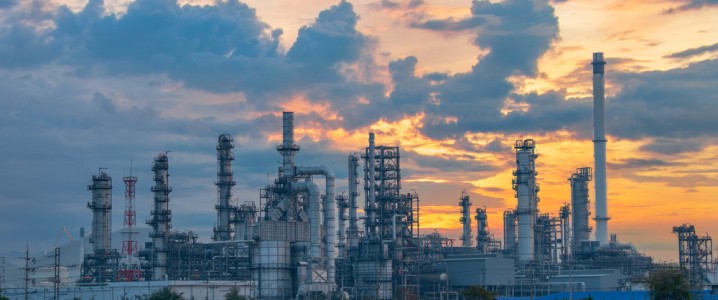
Even as U.S. diesel and gasoline prices soared in the wake of the U.S.-Israeli war with Iran, both fuels remained widely available, just more expensive. Now, a few station owners are saying they are out of diesel, though this appears to be an isolated problem for the moment. However, if the diesel and gasoline supply situation does not change, more and more stations may find themselves without one or both of these two crucial motor fuels.
Proximity to supply is starting to matter more and more. For example, in Texas (where many refineries and oil fields are located), the statewide average for diesel as of September 20 was $5.9779 per gallon. Regular gasoline was $3.9480 per gallon. In California (where refineries and oil fields are not as plentiful and air pollution rules complicate refining requirements) the statewide average for diesel was $8.4244 per gallon, while regular gasoline was $6.1533 per gallon.
And, it's not just ground transportation that is being affected, of course. Several airlines have announced they are cutting back on flights as a response to higher aviation fuel prices.
With the disruption to the oil markets, we are about to see that not only do local costs differ when it comes to energy, but also local availability. In this piece, the author makes the case that "the market has crossed from a pricing problem, which money solves, to a deliverability problem, which money alone does not." Delivery of gasoline, diesel, and aviation fuel in particular is going to be governed by two factors:
- Proximity to supply. Can the products be physically delivered when and where needed? It does no good to promise delivery of jet fuel to an airport hours or days after scheduled flights that needed it have been canceled.
- The ability to make the necessary payments. Prices are rising and many companies may have had sufficient cash resources to pay for fuel previously, but now find themselves struggling to do so with the same cash resources.
Here are some points of vulnerability:
Impor t-dependent Northwest Europe and inland markets facing winter demand on top of freight fuel; the US Gulf Coast, whose refining and export weight makes any local outage a global event; import-dependent emerging markets where foreign exchange and cargo finance can fail before physical stocks do; and airports with concentrated, hard-to-substitute supply. The common thread is that substitution is hardest exactly where the stakes are highest.
He concludes: "Either supply recovers or consumption falls, and consumption falling is not the crisis being escaped. It is the crisis arriving."
We are entering the next phase of the energy crisis initiated by the U.S.-Israeli war with Iran. Petroleum product inventories have fallen close to the minimum operating requirements. That means daily consumption will have to come into balance with daily production. Somebody (probably a lot of somebodies) is going to be using less petroleum or going without it altogether for some uses.
By Kurt Cobb via Resource Insights


