
Breaking News:
Prague Caps Fuel Prices, Taxes Orlen's ‘Windfall’ Refining Margins
Oil Industry Braces for Years-Long Iran War
Oil industry executives are preparing…
StanChart Warns Oil Is Now Built for Sharper, More Frequent Spikes
Oil prices briefly approached $110…
Energy investors are raving about this new resource
"It's most important 8 minute read of my week…"
Global Refinery Crunch Pushes Diesel Prices to New Records
By Irina Slav
- U.S. diesel prices have surged above $6.50 per gallon, as lost Middle Eastern and Russian fuel supplies collide with limited global refining capacity.
- Washington is debating a diesel export ban to ease domestic prices, but opponents warn it could worsen the global shortage and potentially trigger similar restrictions elsewhere.
- Europe is particularly vulnerable, having closed significant refining capacity while becoming increasingly dependent on imported crude and refined fuels from the Middle East and other regions.
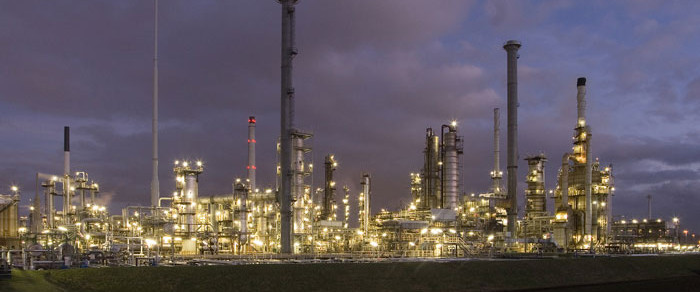
U.S. diesel prices broke another record last week, topping $6.50 per gallon. In Europe, fuel prices are soaring, and shortages are looming over already struggling economies. There is simply not enough refining capacity in the world to make up for the loss of Middle Eastern and Russian barrels. And there is no quick fix.
Last week, Russia said it would extend a ban on diesel exports until the end of October, as Ukrainian drone attacks on refineries continued, despite President Donald Trump’s call on the Zelensky government to stop attacking energy infrastructure, blaming the diesel price surge solely on those attacks. The latest attack came on Sunday, targeting one of Russia’s largest refineries.
However, the loss of fuel supply from the Middle East is much larger, the Wall Street Journal reported last week, citing figures from the International Energy Agency showing the amount of diesel output lost in the Middle East was three times as high as lost Russian supply.
Now, there are calls in Congress for a U.S. ban on diesel exports. Rep. Tim Burchett tabled a bill to that effect last week, and Senate Majority Leader John Thune has backed the proposal. Energy Secretary Chris Wright and Interior Secretary Doug Burgum oppose it as a bad idea that would ultimately backfire, but the very fact that some legislators considered an export ban suggests the supply situation is pretty grim even for the world’s largest oil producer. Related: Hormuz Blockage Puts Qatar's $83 Billion LNG Bet at Risk
Diesel prices underpin the price of pretty much everything else. When they rise, other prices follow, notably food prices, to which people are particularly sensitive. This is of particular concern in Washington ahead of the midterm elections in November, hence the idea of an export ban. A ban could bring down prices at home, but it would push prices even higher elsewhere, aggravating an already quite grave fuel supply crisis. It is a crisis that no one could have foreseen, but also one that might have arguably been less grave had there been more refining capacity in the world.
The fact is that over the past decade or so, a lot of refineries have been shut down under pressure from the net-zero movement that has come to dominate energy policies, mainly in Europe, but also in the U.S. under Democratic administrations. Refining had become a losing game for many, so they either shut down or converted their capacity to biofuels.
“We’ve seen the oil majors effectively reduce their exposure to that sector because the returns on actual capital employed have been poor,” Wood Mackenzie senior VP for refining, chemicals, and oil markets Alan Gelder told the Wall Street Journal. “The classic phrase we used was: ‘How do you make a small fortune? Take a large fortune and build a refinery.’”
While refineries closed in Europe and the United States, however, Middle Eastern petrostates built new ones, coming to account for a bigger portion of global refining capacity. Profit, per the experts cited by the WSJ, was not the primary motivation. Employment and domestic fuel supply security were. Now, that capacity has been compromised – and some of it has been damaged by Iranian strikes on Gulf energy infrastructure – and there is no one to pick up the slack, with U.S. refiners already operating at rates as high as they can.
To add insult to injury, there is one refinery in Europe sitting idle because it is the property of Russia’s Lukoil, which the Trump administration sanctioned last November, prompting the company to put its international business up for sale. According to a recent report by the Financial Times, a deal between Lukoil and Carlyle Group for the latter’s acquisition of the business had become “bogged down in an inter-agency process involving the National Security Council, State Department and Department of Energy,” leaving urgently needed refining capacity offline.
“There is significant underutilised refining capacity across Lukoil’s European assets that could help bring additional refined-product supply to market and ease pressure on fuel prices,” Carlyle said, as quoted by the FT, referring probably to the Romanian Petrotel refinery, which has been idled since the U.S. sanctions went into effect. Lukoil’s Bulgarian facility is operating. Petrotel has a capacity of about 50,000 barrels daily. This is not a huge amount of fuel, but in the current crisis, every barrel matters.
There is no solution to the world’s fuel problem in sight. Tanker traffic via the Strait of Hormuz remains severely depressed, Ukrainian drone attacks on Russian refineries continue, and if the U.S. bans diesel exports, according to the WSJ, China and India may follow its example, plunging the rest of the world into hitherto unseen levels of fuel shortages. The biggest loser of the situation, it appears, will be Europe, due to its heavy dependence on energy imports in both crude oil and refined products, and its shrinking refining capacity.
By Irina Slav for Oilprice.com
More Top Reads From Oilprice.com
- Europe’s Fuel Crisis Spreads From Diesel to Jet Fuel
- Saudi Arabia Reroutes Oil Exports as Houthi Strikes Target Yanbu
- Hungary Asks U.S. to Waive Tariffs Over Russian Oil Purchases
Download The Free Oilprice App Today
Previous Post\ \ StanChart Warns Oil Is Now Built for Sharper, More Frequent Spikes
Irina Slav
What I Cover Irina Slav has been writing about global energy markets since 2007, covering the oil and gas industry, energy security, commodities, and the…
Related posts
Where Is OPEC+? Riyadh and Moscow’s Silence Is Becoming Deafening The Secret Houthi-U.S. Deal That Could Push Saudi Arabia Back to Beijing Record Diesel Prices Raise Fears of Local Fuel Shortages
Leave a comment
First Name
Last Name
That email address is already in the database. Please login to your account to post your comment, or enter a different email address to continue with your comment & account creation.
Captcha
Comment
Please understand that, by submitting this form, you will be creating a free OilPrice.com account, and therefore agree to abide by our Terms of Use. Your details will be stored in our database and shared with our third party mailing list provider. You will be sent an email containing a link that will ask you to generate a new password - please follow the link to complete your OilPrice account activation.
We will save the information entered above in our website. Your comment will then await moderation from one of our team. If approved, your data will then be publically viewable on this article. Please confirm you understand and are happy with this and our privacy policy by ticking this box. You can withdraw your consent, or ask us to give you a copy of the information we have stored, at any time by contacting us.


