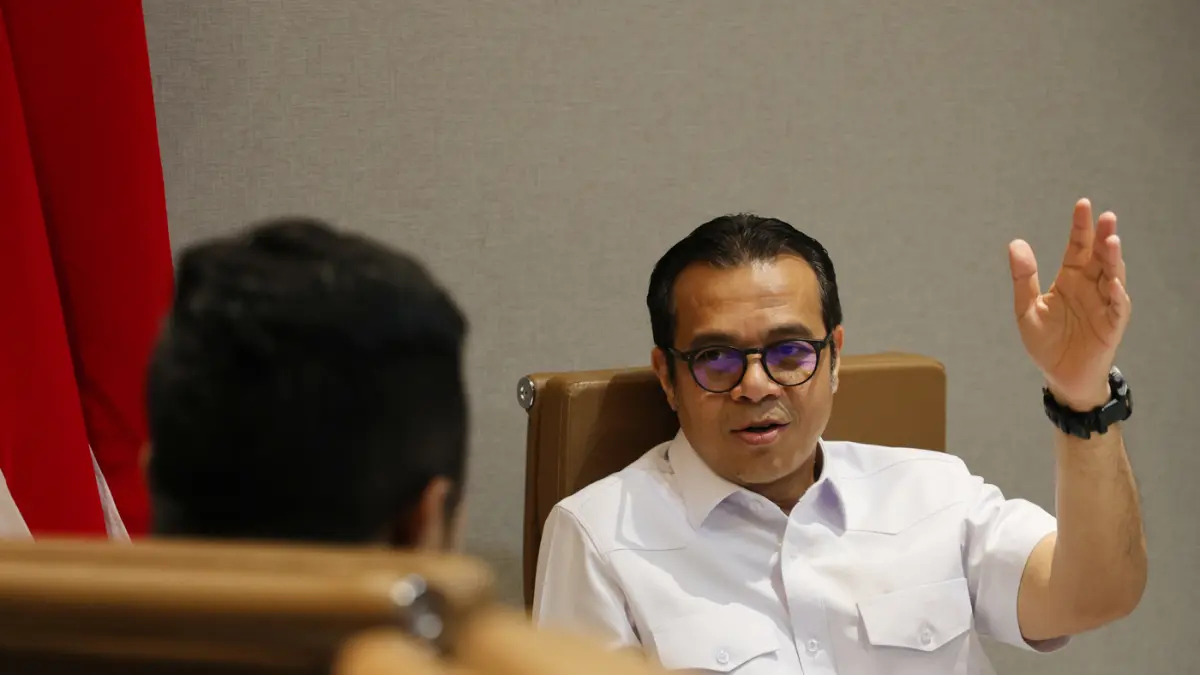
Komisi II DPR RI Encourages Building Digital Sovereignty Architecture
Indonesia's digital problem is not just a technology problem. This issue touches the essence of independence, namely the nation's ability to determine its own destiny amid global change.
Jakarta (ANTARA) - Member of Commission II of the Indonesian House of Representatives (DPR RI) Azis Subekti said that digital sovereignty needs to be built as a national architecture involving the state, business world, universities, technology communities, media, and civil society.
According to Azis, Indonesia's digital transformation should not be understood merely as expanding internet access or using digital applications, but must be part of efforts to strengthen the nation's independence in the 21st century.
"Indonesia's digital problem is not just a technology problem. This issue touches the essence of independence, namely the nation's ability to determine its own destiny amid global change," said Azis in Jakarta on Thursday.
He explained that the centers of global power are now shifting to data, algorithms, computing centers, submarine cables, digital networks, and artificial intelligence. This condition is different from the agrarian era which relied on land control or the industrial era supported by factories and production technology.
Azis assessed that Indonesia has significant capital to build digital independence because it is supported by a large population, a strong digital market, vast territory, and strategic geographical position.
According to him, Indonesia should not only be a digital market but must also be able to create added value from data, technology, and digital innovation domestically.
"Indonesia produces a large amount of data. The highest value of that data must be returned to Indonesia," he said.
The founder of the Indonesian Productive Society Association said that the digital sovereignty agenda needs to be built on three main foundations.
The first foundation includes physical infrastructure such as submarine cables, fiber optics, satellites, data centers, internet exchanges, network security, and diversification of international routes.
The second foundation covers economic and technological aspects, including data, cloud computing, artificial intelligence, cybersecurity, research, software industry, and digital talent.
Meanwhile, the third foundation includes digital literacy, algorithm ethics, protection of public space, critical education, media strengthening, and community resilience against information manipulation.
Azis emphasized that these three foundations must be built in an integrated manner so that various national digital programs do not run separately.
"Indonesia must not be anti-world, but also must not be naive in front of the world. Openness must be accompanied by the ability to regulate oneself," he said.