
Norway's Untapped Oil and Gas Frontier Is Drawing Renewed Interest
By Jan-Thore Bergsagel - Oct 16, 2026, 2:00 PM CDT
- Norway could hold significant undiscovered oil and gas reserves beneath thick volcanic rock in the largely unexplored Norwegian Sea.
- New seismic and electromagnetic technologies are reviving exploration interest, with Equinor, Aker BP, and other industry players investigating the potential.
- New discoveries could help offset Norway’s declining production after 2030, strengthening Europe's long-term energy security.
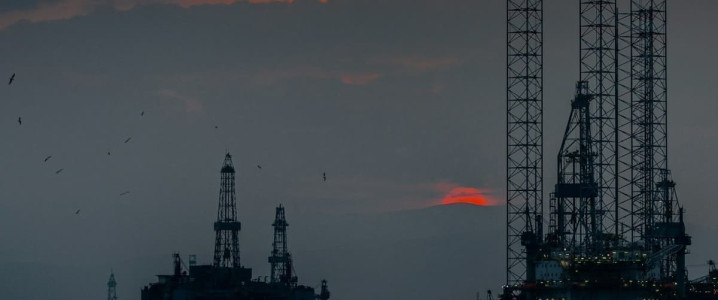
More than three decades after Norway opened parts of the Norwegian Sea to petroleum exploration, potentially significant oil and gas resources remain hidden beneath thick layers of volcanic rock. Now, advances in exploration technology and renewed industry interest could bring one of Europe's least explored offshore frontiers back into focus.
Norway may still hold substantial undiscovered oil and gas resources in areas that have remained virtually untouched by exploration drilling for more than 30 years.
According to the Norwegian Offshore Directorate, potentially significant petroleum resources could exist beneath extensive basalt formations in the western Vøring and Møre basins of the Norwegian Sea.
Despite being opened for petroleum activities in 1994, these areas have attracted limited exploration activity, largely because thick volcanic layers make conventional seismic imaging exceptionally difficult.
No exploration wells have yet been drilled to test the prospective formations beneath the basalt in these areas.
"It's uplifting to see the companies' interest in sub-basalt exploration. The areas we're talking about are among the least explored on the NCS, and there could be significant undiscovered resources there," said Vaka Antonsdottir, Assistant Director for Exploration at the Norwegian Offshore Directorate, in a statement published October 15.
Now, technological advances and renewed interest from the petroleum industry could change that.
A Hidden Petroleum Frontier
The basalt formations originated during the geological separation of Norway and Greenland, when extensive volcanic activity accompanied the opening of the North Atlantic Ocean.
These layers cover older geological formations that could potentially contain petroleum accumulations.
However, basalt has long represented a major technical obstacle for exploration. Its physical properties interfere with seismic signals, making it difficult to identify potential reservoirs beneath the volcanic rock.
As a result, large parts of the western Norwegian Sea remain poorly understood despite decades of petroleum activity elsewhere on the Norwegian continental shelf. Related: German Power Supply Startups Exit Market as Wholesale Prices Soar
Norway's 2026 Resource Report identifies improved subsurface imaging as a potential catalyst for exploration in these areas, suggesting that technological advances could eventually make them among Europe's most interesting exploration frontiers.
The opportunity remains highly uncertain, however, with insufficient geological information to establish reliable estimates of recoverable resources.
Energy Companies Explore the Sub-Basalt Opportunity
The renewed attention was highlighted at an industry seminar organized by the Norwegian Offshore Directorate in Stavanger on October 15.
Representatives from Equinor, Aker BP, Harbour Energy, TGS and EMGS presented technical work related to exploration beneath volcanic formations.
Emerging technologies, including ocean-bottom seismic surveys, full-waveform inversion and electromagnetic methods, could improve the industry's ability to identify geological structures previously obscured by basalt.
Artificial intelligence-assisted seismic interpretation may offer further improvements in extracting information from complex geological datasets.
While participation in the seminar does not necessarily indicate concrete drilling plans, the involvement of major operators and geophysical specialists highlights growing technical interest in an area that has historically received limited exploration investment.
Only one active production license currently focuses on volcanic-related exploration opportunities, according to the Directorate.
The challenge now is determining whether improved imaging can translate into commercially attractive drilling prospects.
Norway Faces a Growing Resource Replacement Challenge
The renewed exploration interest comes at a critical time for Norway's petroleum industry.
The Norwegian Offshore Directorate has warned that production from the Norwegian continental shelf could decline significantly after 2030 unless new discoveries and development projects help offset falling output from mature fields.
Although Norway remains a major offshore producer, exploration has increasingly concentrated on smaller discoveries near existing infrastructure.
These developments can offer relatively low costs and shorter development timelines, but they may be insufficient to sustain production over the longer term.
The western Norwegian Sea represents a different opportunity.
Rather than extending the life of established petroleum fields, successful sub-basalt exploration could potentially establish entirely new producing areas.
Such discoveries would not provide an immediate solution to declining production, but they could expand Norway's long-term resource base.
For now, the scale and commercial viability of the opportunity remain unknown.
Europe's Energy Security Adds Another Dimension
Norway's exploration outlook also carries implications for European energy security.
Following the sharp reduction in Russian pipeline gas deliveries, Norway has emerged as Europe's leading supplier of pipeline natural gas.
Maintaining that position over the coming decades will require continued investment, improved recovery from existing fields and new discoveries.
Potential petroleum resources beneath the Norwegian Sea's basalt formations could eventually contribute to that supply base, although any commercial development would likely take many years.
Exploration drilling, reservoir appraisal, infrastructure development and regulatory approvals would all be necessary before any potential discoveries could enter production.
Nevertheless, the renewed interest illustrates a broader shift in Norway's exploration outlook.
After more than five decades of offshore petroleum production, some of the country's remaining resource potential may lie not simply in deeper waters or remote frontier areas, but beneath geological formations that conventional exploration technologies have struggled to penetrate.
Whether commercially recoverable oil and gas exist beneath the basalt remains an open question.
But with technological barriers gradually being challenged, one of Norway's least explored offshore regions may finally be attracting the attention needed to answer it.
By Jan-Thore Bergsagel for Oilprice.com
More Top Reads From Oilprice.com
- Data Centers Drive Surge in India’s Renewable Power Demand
- Iran War Set to Push PetroChina’s Trading Profit to Record $3 Billion
- Global Gas Crunch Makes Europe’s Remaining Coal Plants Profitable

Download The Free Oilprice App Today


ADVERTISEMENT
Set us as your preferred Google source
FACEBOOK Twitter LINKEDIN REDDIT PRINT
Previous Post\ \ Standard Chartered: Trump's Russian Diesel Won't Add New Supply

Jan-Thore Bergsagel
Jan-Thore is a Norwegian oil and gas expert with two decades of industry experience across a variety of roles. For the past five years, he…
Related posts
U.S. Oil Drillers Back Off Even As Prices Soar Oil Prices Are Stuck at $105 as Geopolitical Risks Mount IMF Sounds Alarm Over AI’s Threat to Government Tax Bases
Leave a comment
First Name
Last Name
That email address is already in the database. Please login to your account to post your comment, or enter a different email address to continue with your comment & account creation.
Captcha
Comment
Please understand that, by submitting this form, you will be creating a free OilPrice.com account, and therefore agree to abide by our Terms of Use. Your details will be stored in our database and shared with our third party mailing list provider. You will be sent an email containing a link that will ask you to generate a new password - please follow the link to complete your OilPrice account activation.
We will save the information entered above in our website. Your comment will then await moderation from one of our team. If approved, your data will then be publically viewable on this article. Please confirm you understand and are happy with this and our privacy policy by ticking this box. You can withdraw your consent, or ask us to give you a copy of the information we have stored, at any time by contacting us.
ADVERTISEMENT
ADVERTISEMENT
Most Popular
 \ \ How Low Can the Strategic Petroleum Reserve Actually Go?
 \ \ Why Record Crude Output Can’t Solve America’s Diesel Crisis
  \ \ House Republicans Move to Block Trump's Russian Diesel Deal
  \ \ Emergency Oil Releases Risk Draining the World’s Last Supply Cushion
  \ \ Record Tanker Rates Leave Heavy Crude Stranded in the Americas

reCAPTCHA
Recaptcha requires verification.
protected by reCAPTCHA


