
World’s Top Crude Trader Isn’t Ruling Out $200 Oil Just Yet
By Tsvetana Paraskova - Oct 08, 2026, 7:00 PM CDT
- Vitol warns oil could surge to $200 per barrel if ship-to-ship transfers near the Strait of Hormuz are disrupted, threatening vital Middle Eastern oil exports.
- The oil crisis is becoming a shipping crisis, as inefficient tanker transfers strain global vessel availability and push freight rates to unprecedented highs.
- Tanker earnings have exceeded $500,000 per day, while shipping costs from Saudi Arabia to Rotterdam have soared from $2 to over $35 per barrel, adding pressure to fuel prices.
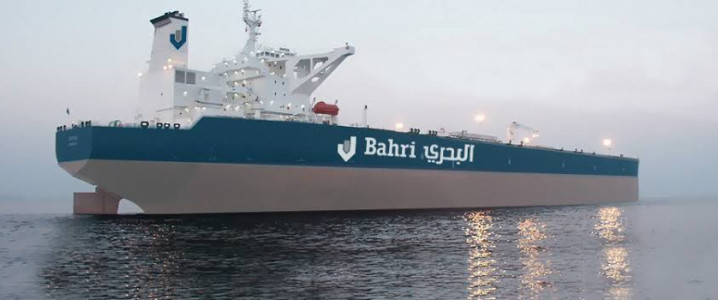
Ship-to-ship transfers in the Gulf of Oman that keep oil flowing from the Middle East provide a lifeline to Gulf producers and to the oil market, according to Russell Hardy, chief executive officer at the world’s biggest independent oil trader, Vitol Group.
“Without it, you do have that $200-a-barrel scenario, so it is pretty important it continues,” Hardy said at the Energy Intelligence Forum in London this week. “There aren’t any more inventories to drain in the West.”
The ship-to-ship (STS) transfers, in which smaller vessels pick up oil to transit the Strait of Hormuz and then reload the cargo onto larger tankers in the Gulf of Oman, have soared in recent weeks. Some estimates put oil flows out of the Strait of Hormuz at or above the pre-war levels of around 20 million barrels per day (bpd) of oil and products leaving the Persian Gulf.
Gulf Producers’ Lifeline
Over the past 7-10 days, a total of 14 million bpd of oil left the Middle East, including 2 million bpd of products and 12 million bpd of crude oil, Vitol’s Hardy told the London forum.
These numbers are still significantly below pre-war levels. But it is critical they are kept up to prevent another major spike in oil prices, according to the top executive of the trading giant.
Any deterioration of shipping conditions in and around the Strait of Hormuz risks trapping higher volumes and leaving fewer barrels that move through the chokepoint. The number of attacks on tankers in the area has jumped in recent days, threatening the lifeline of the Gulf oil exporters and risking another leg higher in oil prices.
In the week to October 5, at least 12 attacks on oil, LNG, and liquefied petroleum gas (LPG) tankers took place around the Strait of Hormuz, Reuters reports, citing data from maritime security sources who analyzed incidents based on information received from the area.
“IRGC attacks, attempted attacks, and/or harassment activity persisted including UAV overflight, targeted surveillance of merchant shipping, and occasional VHF hailing,” the US Navy-led Joint Maritime Information Center (JMIC) said in a note this weekend.
“These actions continue to demonstrate Iran’s intent to assert presence along key transit lanes and maintain pressure on transiting vessels.” Related: U.S. and Russia Discuss Reviving Russian Gas Sales to Europe
STS transfers are helping keep crude oil flows from the Middle East at some adequately high levels, but fuel shipments have collapsed since March and haven’t recovered in any meaningful way, keeping upward pressure on the global fuel market and crude oil prices.
From Oil Crisis to Shipping Crisis
While somewhat efficient in preventing oil price spikes to $200 a barrel, these transfers are highly inefficient for the global tanker fleet, Vitol’s Hardy noted.
The shuttle-shipping through the Strait of Hormuz is “very inefficient,” the executive said, noting that many tankers remain tied up in the area waiting for cargoes for days or weeks. This effectively takes them out of the shipping fleet and slashes tanker availability on other routes, resulting in record-high freight rates on key maritime corridors.
“We started this conflict with a crude crisis. Then it turned into a product crisis. Now we have more crude oil coming out of the Middle East, but it is turning into a shipping crisis,” Hardy told the Energy Intelligence Forum.
“There is really not quite enough shipping to go around,” he added.
As a result, shipping costs for buyers and refiners are soaring and, most of all, they make calculating the costs nearly impossible.
“It is creating a lot of stress for everybody because nobody really knows, to the nearest $2, $3, $4 [a barrel], how much their shipping costs are going to be,” Hardy said.
“That creates a difficult set of decisions for people to make day to day.”
Average global crude vessel earnings exceeded an unprecedented level of $500,000 per day in early October, which is 10 times the 2025 average, Rico Luman, senior sector economist, Transport and Logistics, at ING, wrote in a note this week. Suezmaxes and very large crude carriers (VLCC) have seen even higher daily rates.
For example, crude shipments from Saudi Arabia’s Ras Tanura within the Persian Gulf to Rotterdam were about $2 per barrel last year, while the costs surged beyond $35 a barrel in September, Luman said.
“Restructured oil flows and a rush for capacity to handle oil transport operating under military protection have driven rates sharply higher, adding further pressure to fuel prices alongside strong refinery margins,” according to the economist.
The record-breaking shipping costs and refinery margins in Europe 2.5 times higher than the 2025 average, could add more than $0.50 to the base price of a liter of diesel at the pump, Luman said.
“The capacity squeeze, combined with operating in risky war zones and facing highly elevated insurance premiums, has sent tanker rates soaring,” the expert added.
“We have seen previous surges in this volatile market, such as in 2022 after sanctions were placed on Russia, but this spike is beyond levels ever seen before.”
By Tsvetana Paraskova for Oilprice.com
More Top Reads From Oilprice.com


