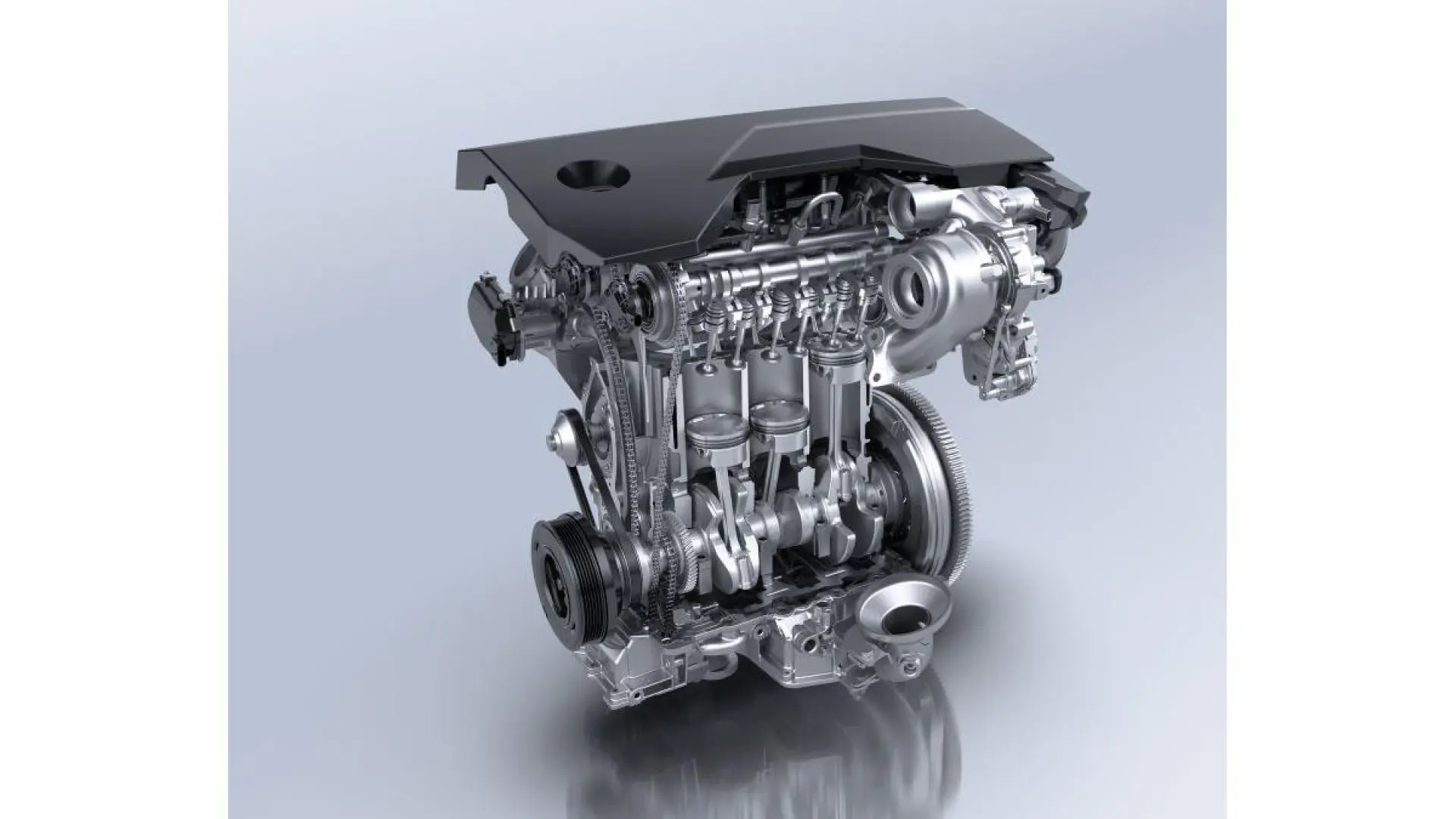
Stellantis introduces the new Turbo 100, a deeply revised engine that replaces the problematic previous PureTech.
Stellantis has taken advantage of the arrival of its new Turbo 100 engine to open a new chapter in the evolution of its gasoline engines. The automotive group introduces a thorough technical revision of its well-known three-cylinder block with the aim of increasing efficiency, optimizing durability, and reinforcing customer confidence for the future.
One of the most significant changes affects the timing system. The new engine abandons the previously used oil-bathed belt and adopts a timing chain designed to offer greater long-term robustness. This solution responds to the experience accumulated over recent years and seeks to simplify maintenance and improve user peace of mind.
The previous PureTech, which equipped numerous models from Peugeot, Citroën, and Opel, had received various updates throughout its commercial life to improve its behavior and reliability. These included a reinforced belt and new lubricant specifications. Now, with the Turbo 100, Stellantis takes a further step with a virtually comprehensive revision of the mechanical assembly.
A practically new engine in its entirety
This new 1,199 cc block develops 100 hp, a figure that rises to 110 hp in the case of the Peugeot Rifter. According to the company, nearly 70% of its components are completely new. Among the new features are reinforced pistons with a cooling gallery, optimized piston rings, a redesigned oil separator, and strengthened structural elements such as the cylinder head and crankcase.
The evolution is not limited to reliability. The Turbo 100 incorporates the Miller cycle and a variable geometry turbocharger, a technology that improves energy efficiency and promotes more progressive power delivery. Furthermore, the entire engine architecture has been designed to work alongside 48-volt mild hybrid systems, with components adapted to the additional stress this technology entails.
The result is a more advanced, efficient, and prepared engine to meet current market demands. The replacement of the belt with a chain also represents one of the most significant technical decisions of this new generation.
Added to this is the extended Peugeot warranty, which reaches up to 8 years or 160,000 kilometers on new vehicles, provided that maintenance plans are followed within the official network. At the same time, Stellantis continues to offer specific solutions and procedures for customers with earlier generation PureTech engines.


